
A Longer Ride
From junior mining engineer to CEO of Drummond Company, Richard Mullen’s four-decade career has evolved alongside the company he never expected to lead.

Words by Jenny Lynn Davis | Images by Al Blanton
When Richard Mullen joined Drummond Company in 1981, someone told the young mining engineer that the company had 20 years of coal reserves.
At the time, 20 years sounded almost unimaginable.
“I thought, ‘Twenty years? I won’t even be alive in 20 years,’” Mullen laughs. “At that age, it seemed like forever.”
More than four decades later, Mullen still walks through the doors of the company he chose as a recent college graduate. Only now, he does so as its chief executive officer.
His path to that position has taken him from the mines and land holdings of Walker County to the development of an international operation in Colombia, through nearly every division of Drummond Company and eventually into the office responsible for guiding its future.
Through it all, Mullen has remained closely connected to the community where both his story and Drummond’s began.
Born in Jasper and raised in the Goodsprings community, Mullen grew up surrounded by the mining industry. Both of his grandfathers worked in coal mines, and much of his family remained in Walker County when he left for college.
He attended T.W. Martin, then the smallest county school in Walker County, from first grade through high school graduation. In the close-knit community, students played nearly every sport available, and Mullen often served as a team captain. He did not recognize it as preparation for executive leadership at the time, but the experience helped him grow comfortable accepting responsibility and working toward a shared goal.
More importantly, his upbringing established values that have remained largely unchanged throughout his career.
“One of the most important things I learned growing up was that all you really have is your reputation, so you have to keep your word,” he says. “We also believed the only way to get ahead was to work hard.”
Honesty, hard work, and teamwork became the foundation on which he would build both his career and his leadership philosophy.
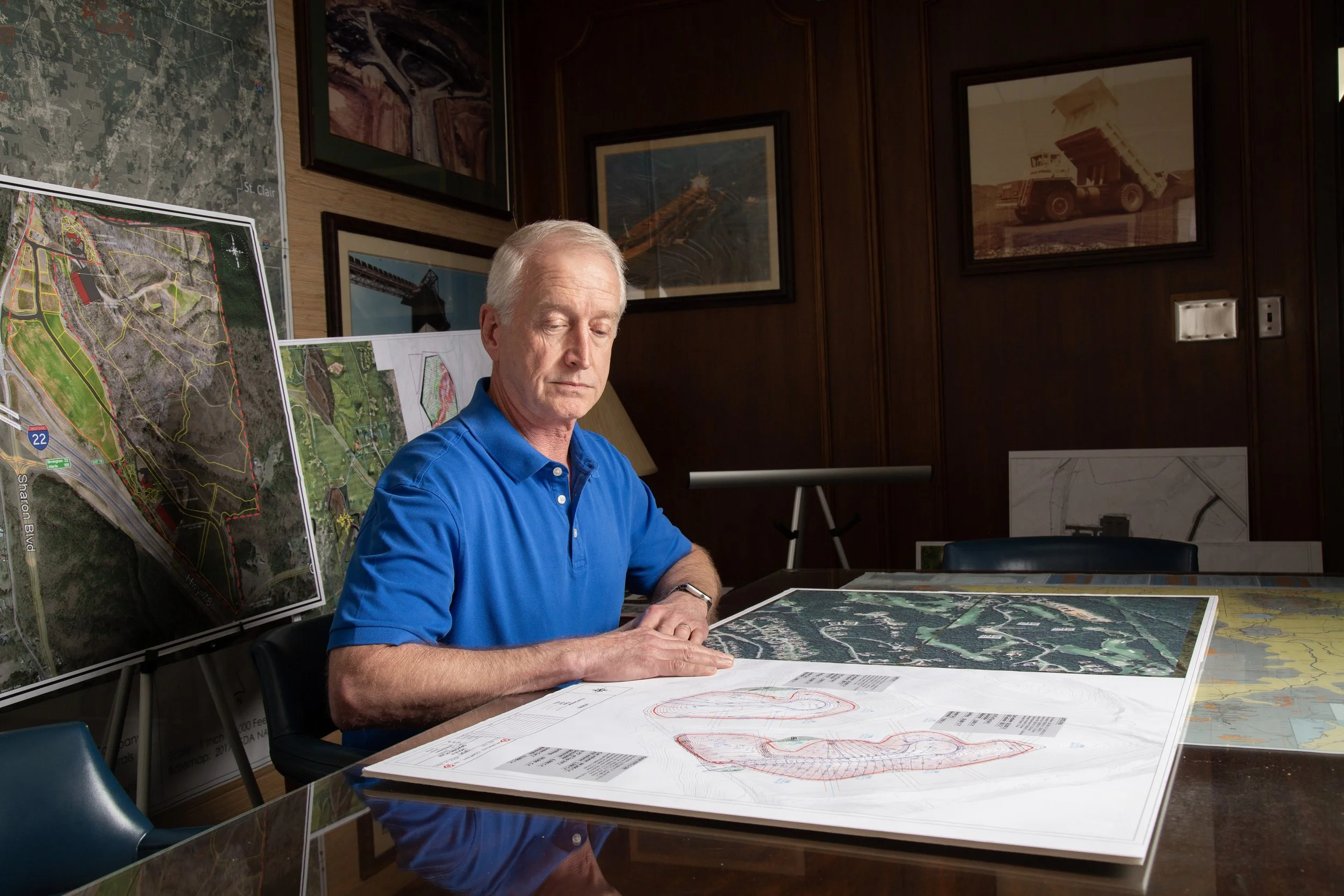
After earning a degree in mining engineering from The University of Alabama in December 1981, Mullen had no shortage of possibilities. He finished first in his class and received offers after nearly every interview.
Drummond, however, offered something the others could not: the chance to build a career close to home.
Mullen already knew the company and had previously worked during college for an underground mining operation that Drummond later purchased. With his parents, grandparents, and extended family still in Walker County, he chose to stay. He entered Drummond as a junior mining engineer, taking on, as he describes, every task in the office that no one else in engineering wanted to do.
That position did not last long.
After approximately 11 months, he moved into one of the company’s mining divisions. He was later transferred to another division and, within about four years of joining Drummond, was placed in charge of one.
From there, Mullen’s career became an extended education in almost every facet of the company.
He worked in mine planning and development, coordinated operations across divisions, and became involved in the search for new mining opportunities as Drummond’s Alabama reserves declined. That search eventually led the company into Colombia, South America.
Mullen helped assemble the project’s permitting package, worked with the Colombian government, and assisted in securing the licenses needed to establish the operation. The project took more than five years to develop.
Mullen still remembers arriving at the site for the first time by helicopter. There was no mine beneath him, only a farm and stretches of pastureland.
“Seeing it grow from that into what it is today, and being part of that process, is an incredible experience for someone in mining,” he says.
The project also allowed him to work closely with longtime Drummond leader Garry Drummond and to observe the planning, persistence, and shared effort required to turn a large-scale vision into reality.
“Working hard toward a common goal and then seeing it become reality has been one of the best parts of my career to look back on,” Mullen says.

His responsibilities continued to expand. He ran a mine, coordinated the company’s surface mining operations, managed its land department, and worked full time in Colombia for a while. After returning to Alabama, he became increasingly involved with Drummond’s senior leadership.
In 2005, Garry Drummond selected Mullen to serve as his executive assistant, placing him alongside the company’s leader throughout the workday and giving him a close view of virtually every decision he made.
Mullen later became Senior Vice President of Mining and then Executive Vice President of Mining, overseeing operations that included Colombia. In November 2016, he was named President and Chief Operating Officer. Three years later, he became CEO.
“It seemed as though they just kept finding places where I could help,” he says.
That description reflects the plainspoken way Mullen approaches his work even today. When others ask what he does at work, he answers: “I help our team fix things.”
The problems have grown more complex over the years, but the process of bringing together the right people to solve them remains one of the aspects of the job he enjoys most.
Mullen credits many of his leadership lessons to the people for whom he has worked, including Garry Drummond. Those lessons did not always come from observing what should be done.
“You take something from every one of them, and it is not always a lesson in how to do things,” he says. “Sometimes it is a lesson in how not to do them.”
Over time, those experiences shaped a leadership style based in fairness and trust. Mullen does not believe fear brings out the best in employees. Instead, he wants people to feel that they have room to make decisions, take reasonable risks, and propose solutions without worrying that support will disappear behind them.
“I try to lead through encouragement and give people the ability to go out on a limb without worrying that I will cut it off behind them,” he says.
There is, however, an expectation attached to that freedom: Employees should not simply identify a problem. They should arrive prepared to suggest how it might be solved.
Mullen also strongly believes in surrounding himself with capable people and letting them do their jobs.
“We have a fantastic group of people,” he says. “We can present them with an issue and say, ‘This is what we have to take care of,’ then watch them work together and develop ideas and plans to solve it.”

That confidence in people is reflected in the company’s approach to employee development. Mullen said Drummond continues to rely on mentorship much as it did when he entered the company. Employees may also receive assistance in pursuing additional education and executive training opportunities.
At the same time, he does not want employees to view the business exclusively through the lens of the company’s established methods. Exposure to outside ideas can allow them to return with new approaches and questions about how Drummond might improve.
The qualities he values most, however, remain the same ones he learned growing up in Goodsprings: honesty, loyalty, and a willingness to work hard.
His own career is evidence of that philosophy. He has remained with Drummond for more than 40 years, while the company has invested in him through new opportunities, increasing responsibilities, and mentors who prepared him to lead.
During that time, both Mullen and Drummond Company have changed considerably.
When he joined the company, Drummond operated dozens of mines across Walker, Jefferson, and northern Tuscaloosa counties. Its presence was visible throughout the region, where many communities had a Drummond operation nearby.
As those mines closed and were reclaimed, the company’s center of mining activity shifted largely to Colombia. A younger generation of Walker County residents may recognize the Drummond name without fully understanding its history or what the company has become.
“We have grown beyond being solely a coal mining company,” Mullen says.
Today, Drummond’s interests include real estate development, the ABC Coke facility in Tarrant, natural gas, solar energy, and power generation, in addition to its mining operations.
“We have become an energy company that also develops real estate,” he says.
That evolution will remain central to the company’s future, particularly as demand for different forms of energy continues to change. Mullen said Drummond is pursuing natural gas and power projects in Colombia, as well as the possibility of additional solar development.
In Alabama, the company is making a significant investment in rebuilding a portion of the ABC Coke plant, with the hope of extending its operational life for decades. Land management and redevelopment are also expected to remain among the most visible parts of Drummond’s work in Walker County.
One example is the Heritage Landing development along Interstate 22, where company-owned property and a reclamation grant were combined to transform a former problem site into an economic driver.
Mullen acknowledged to Drummond’s board that the project might not necessarily produce a large financial return. Its value, he argued, could also be measured by its ability to remove an eyesore and create something beneficial for Walker County.
That connection between business and community remains important to him.
Members of the Drummond family continue to live in Walker County, and Mullen said both the company and the family have maintained a tradition of giving back, often without attracting public attention. Drummond supports organizations including the Walker Area Community Foundation and has assisted the Jasper City and Walker County school systems with various projects.
When possible, the company has also used equipment that once served its mining operations to help public entities complete work more affordably.
Mullen says those efforts are part of a larger culture inherited from the family that built the company.
“The Drummond culture is rooted in that work ethic, but it is also about family,” he says.
That culture, he believes, helps explain why many employees remain with the organization for decades. It creates the sense that they are part of something larger than their individual job descriptions - a working family tied together by shared expectations and history.
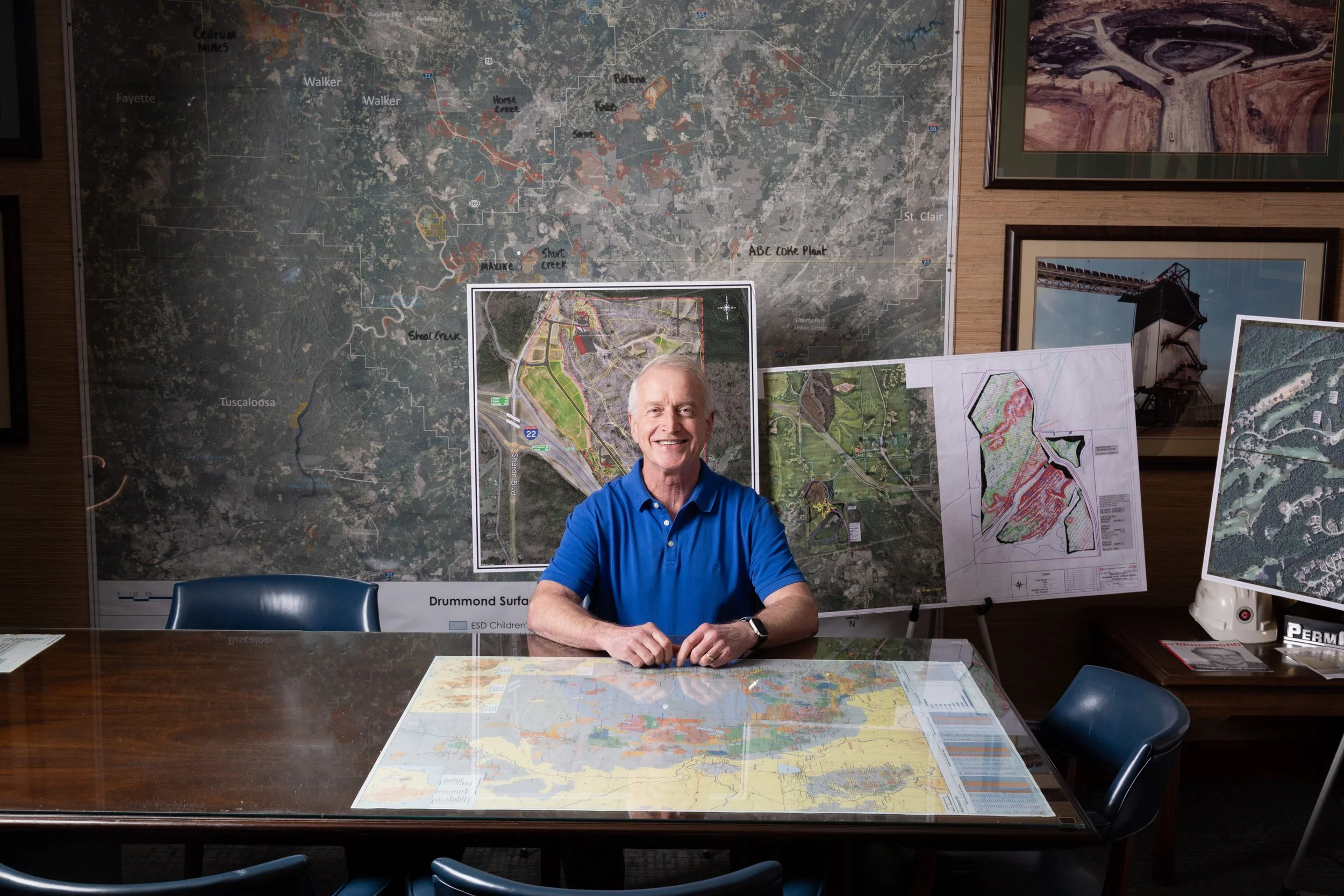
Mullen hopes Walker County residents will recognize the significance of having the company remain partially headquartered in the place where it began.
“It has been a pleasure to be part of it,” he says.
When he thinks ahead to the day his time as CEO eventually ends, Mullen does not first speak about projects, titles, or financial results when considering the legacy he hopes to leave. He hopes the people who worked with him will remember that he was fair, that he encouraged them, and that he treated them as he would have wanted to be treated.
Most of all, he hopes they will remember him as a good person.
Mullen admits that, on the other side of his demanding career, he looks forward to spending more time with his wife, Cheryl, returning to the golf course, and keeping up with his grandchildren. For now, however, there are still problems to solve, people to develop, and projects to move forward.
He never imagined any of it when he first walked through Drummond’s Jasper office as a young engineer.
Looking back, Mullen said he might tell that younger version of himself to ask for help more readily and to spend less time worrying when responsibilities arrived before he felt entirely prepared.
But the message he would most want him to hear is simpler.
“It is going to be a longer ride than you think,” Mullen says, “but it is going to be very, very rewarding.” 78