
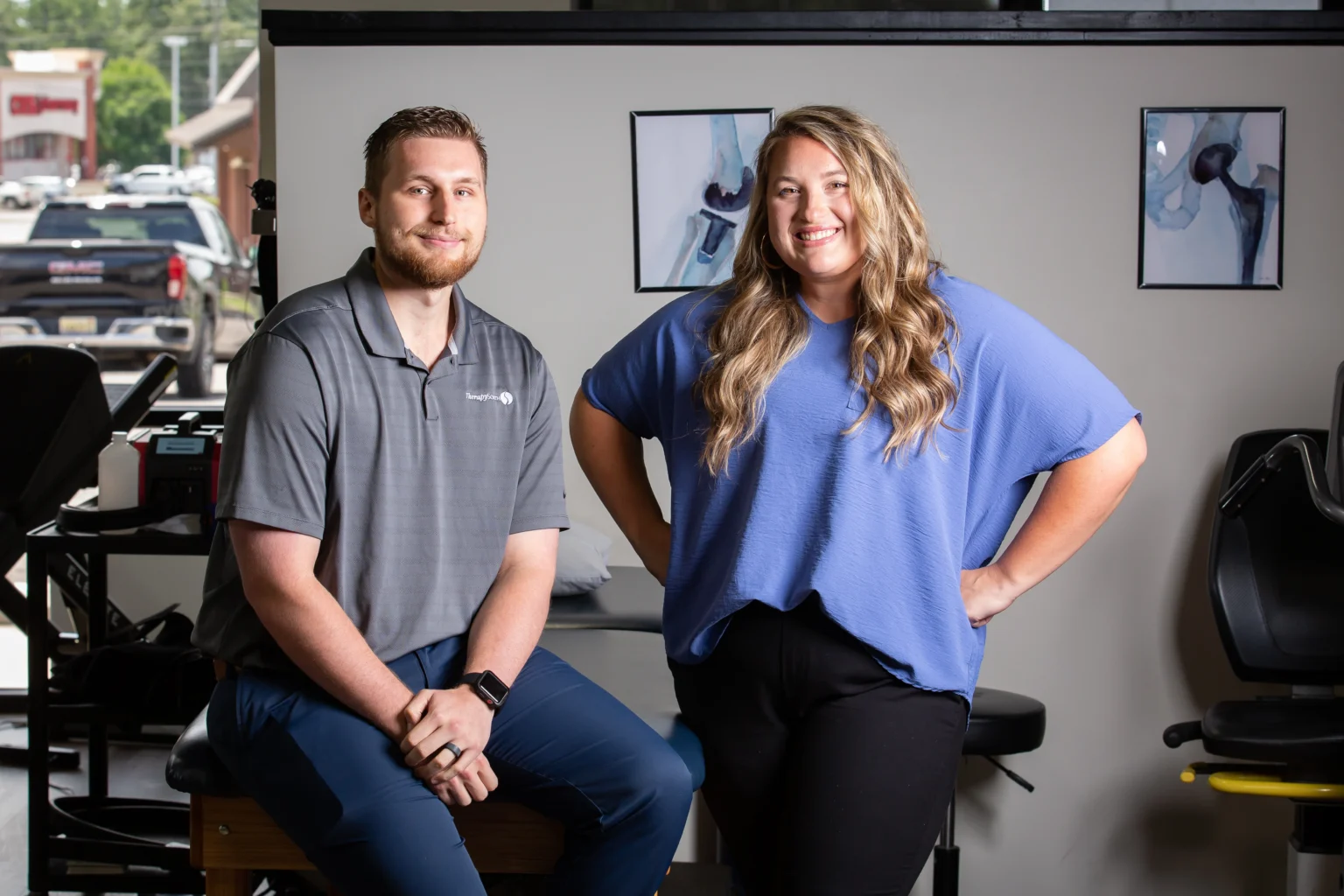


Siblings Taylor and Tanner Rowe bring a shared passion for helping others to TherapySouth’s Jasper clinic.
Words by Jenny Lynn Davis | Images by Al Blanton
At TherapySouth’s Jasper clinic, Taylor and Tanner Rowe can often tell how the other is doing without saying a word.
Sometimes, all it takes is a look across the gym.
“We can read each other’s body language and mannerisms in ways other people may not pick up on,” Tanner says.
That kind of unspoken understanding comes naturally for the Curry natives, who are separated by two and a half years and have spent most of their lives side by side.
Growing up, they had the typical brother-sister relationship. They bickered, competed, and spent plenty of time trying to outdo each other in basketball, wiffle ball, and whatever else they could play in the yard. Tanner, as the younger sibling, was usually determined to beat his older sister.
Once Taylor started driving, though, their relationship began to change. They became close friends, spending time at the driving range, playing disc golf, and finding more activities they enjoyed together.
Years later, they have found themselves sharing another part of life: their workplace.
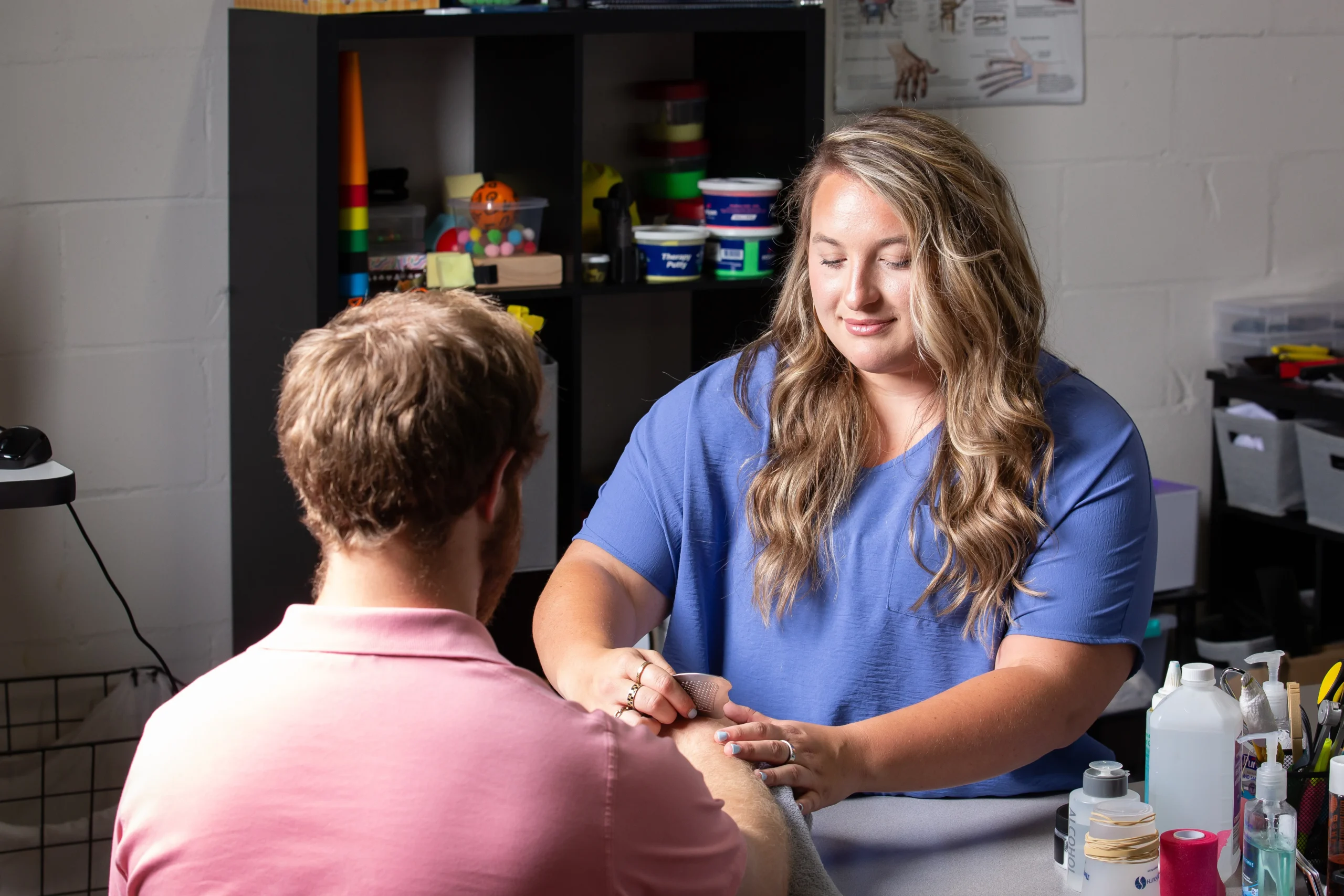
Taylor is an occupational therapist specializing in hand therapy, while Tanner is a physical therapist assistant working in outpatient orthopedics. Because they work in different disciplines, they are not usually treating the same patient. Still, they see plenty of each other throughout the day.
Their patients notice, too.
“A lot of times, Tanner and I will be talking to each other, and the patients will look at us strangely,” Taylor says. “I’ll have to say, ‘That’s my brother, by the way,’ because they’re wondering why we’re sharing so many personal details.”
Patients often become invested in the sibling dynamic, asking whether Taylor and Tanner are getting together for dinner or what the family has planned for the weekend.
For the siblings, working together has made it easier to stay involved in the everyday parts of each other’s lives. Instead of waiting until the end of the week to catch up, Taylor can ask Tanner what he and his family are having for dinner or what they are doing that weekend. They can also tell when the other is overwhelmed or simply having an off day.
Although their careers now overlap, Taylor and Tanner found their way into therapy for different reasons.
Taylor originally imagined becoming a teacher, but occupational therapy caught her attention because it offered the possibility of working in a school setting while also giving her other career options. Her path eventually led to hand therapy, a field centered on helping people regain the small but important abilities they may not fully appreciate until an injury or surgery takes them away.
Taylor earned a bachelor’s degree in healthcare management and a master’s degree in occupational therapy from the University of Alabama at Birmingham. She is also a certified lymphedema therapist and plans to pursue certification in hand therapy.
Tanner, meanwhile, always pictured himself doing something connected to sports. He initially considered athletic training before a guidance counselor encouraged him to explore the physical therapist assistant route. He earned his degree from Wallace State and has spent about five years working in outpatient physical therapy.
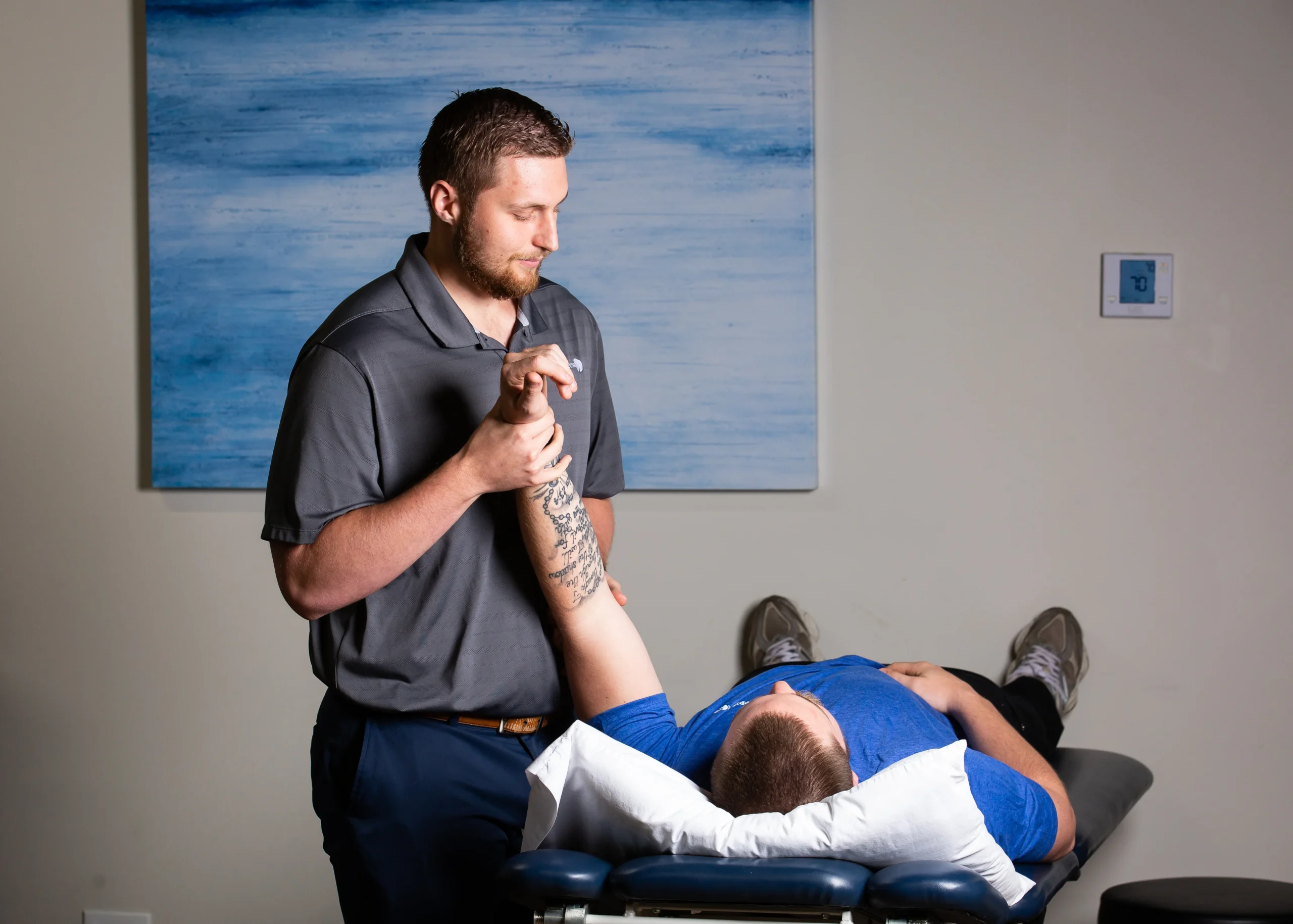
Despite their different specialties, the siblings approach patients in much the same way. Both believe good therapy involves more than treating an injured body part.
Taylor says Tanner has a way of balancing encouragement with accountability. He is compassionate and personable, but he also keeps patients focused on the work required to meet their goals.
Tanner says Taylor is especially skilled at learning what patients actually want to return to doing. That might mean cooking a favorite dish, picking up a grandchild, sewing, crocheting, turning a key, or pulling up a zipper independently.
Those everyday victories are often what make the work most meaningful.
Taylor calls them “God winks”- the moments when a patient realizes they can finally do something that once felt impossible after surgery or an injury.
For Tanner, that same sense of purpose often appears outside the clinic. Former patients may stop him at the store, offer a hug, and tell him how they are doing.
In a community like Jasper, those relationships have room to grow. Therapists may see a patient several times a week for months, learning not only about the person’s recovery but also about their family, work, interests, and history. “You really get to know people,” Taylor says. “We have the ability to make a big impact on people’s lives, but they also make an impact on us.”
Outside of work, Taylor and Tanner still share many of the same interests they did growing up.
Both enjoy sports, family time, and involvement at Mount Vernon Baptist Church. Taylor enjoys golf, church-league softball, crafts, and spending time at the beach or lake. She is also devoted to her dog, Murphy, and loves spending time with her nephew, Tanner’s son James.
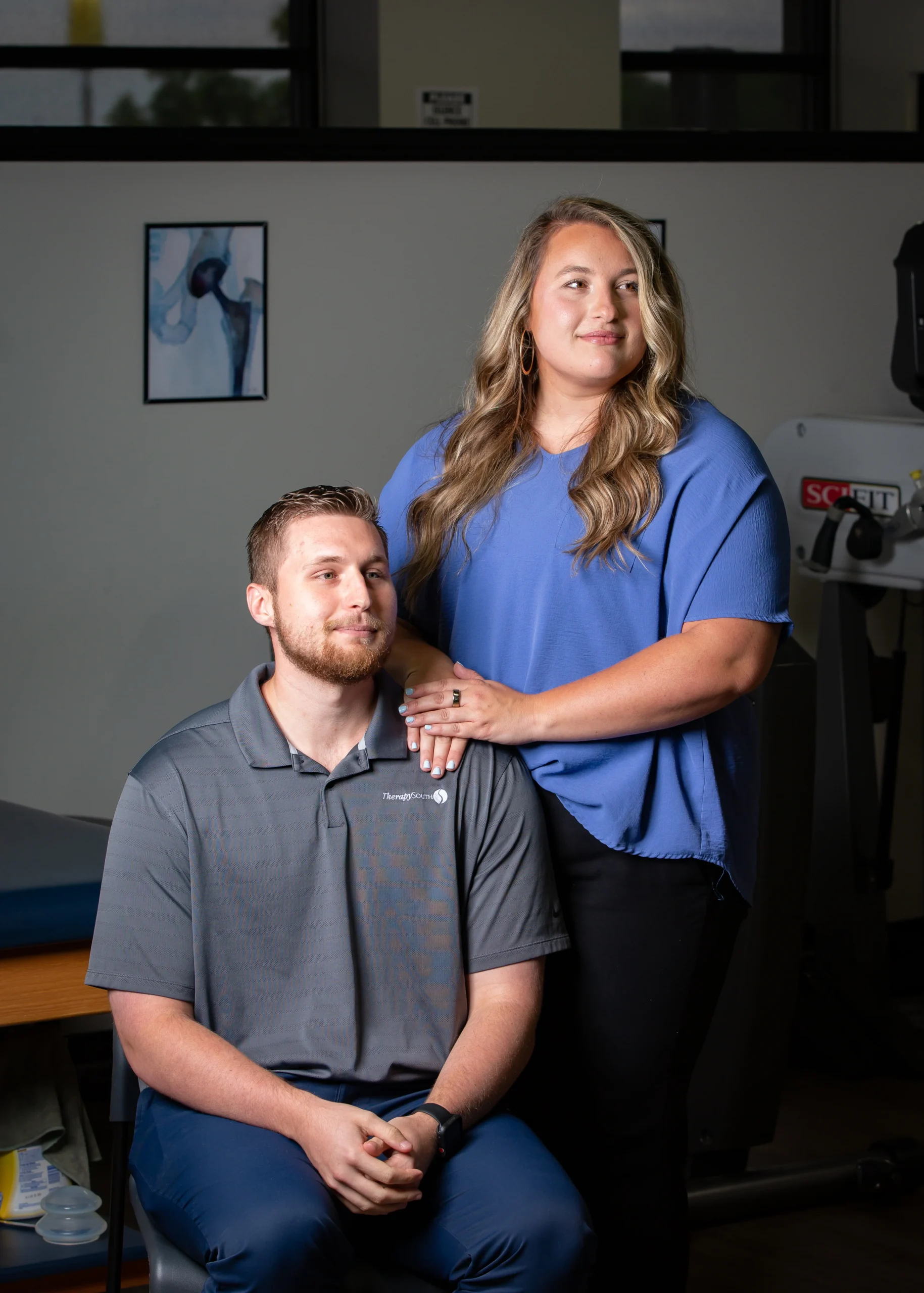
Tanner’s life largely revolves around James and his wife, Kylie, along with church, sports, cooking, and travel. Kylie is also an occupational therapist assistant, making therapy something of a family profession.
Faith and service have long been important to the Rowes. Both siblings have traveled to Honduras on medical mission trips, where they have helped with triage, basic medical care, and mobility needs. Their work has also included assembling and fitting hand-powered mobility devices for people living in areas where traditional wheelchairs may not be practical.
Their faith also shapes the way they care for patients at home. Even when patients do not share their beliefs, Taylor said they hope the kindness and compassion they show will reflect the light of Jesus.
The siblings share a hope that years from now, patients remember how, under Taylor and Tanner’s care, someone listened to them, understood what mattered, and helped them return to the life they wanted to live.
Both are also quick to say that working together is not the whole story – they are building their own careers, developing their own strengths, and caring for patients in their own ways.
But they get to do it with someone familiar on the other side of the gym. 78