
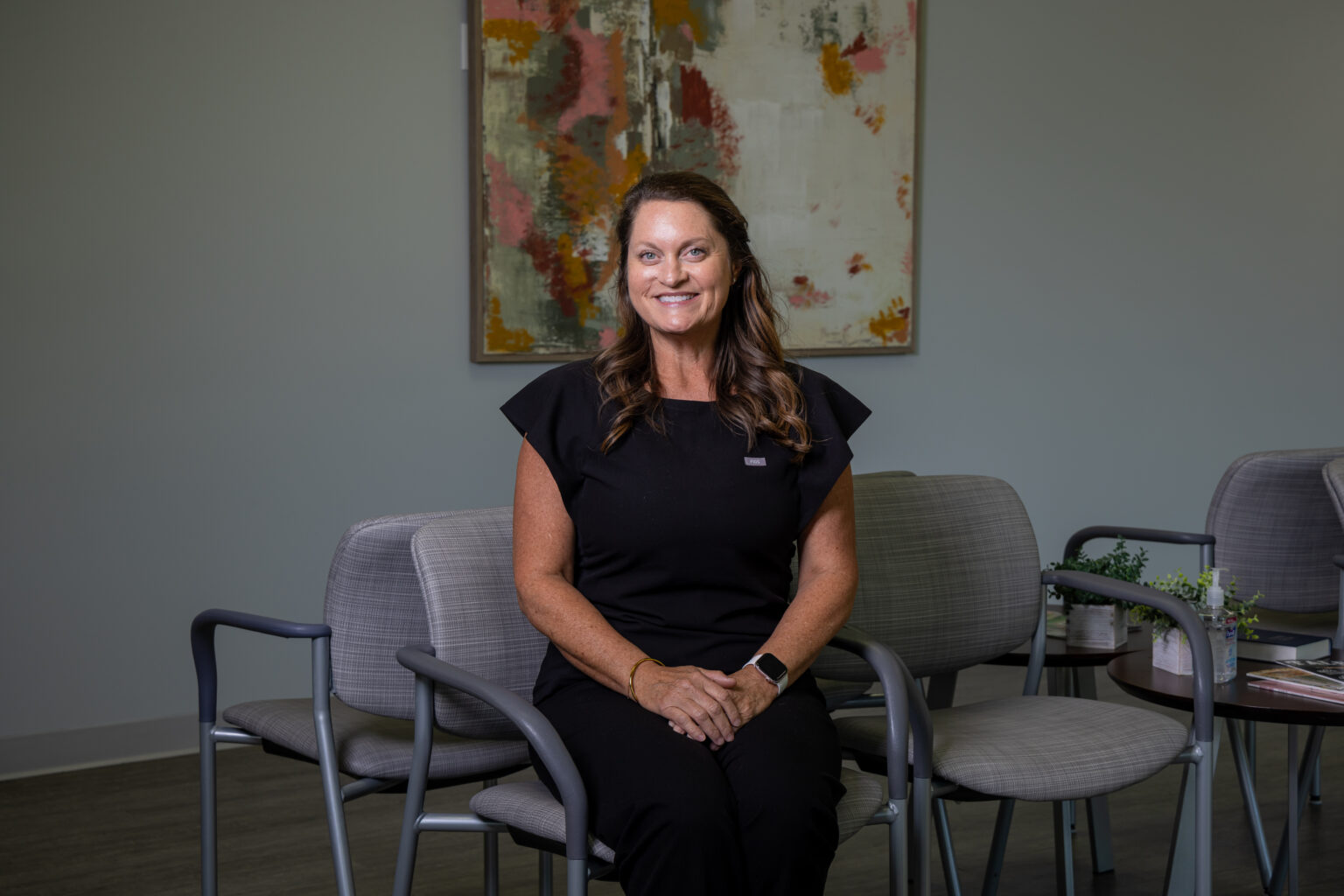
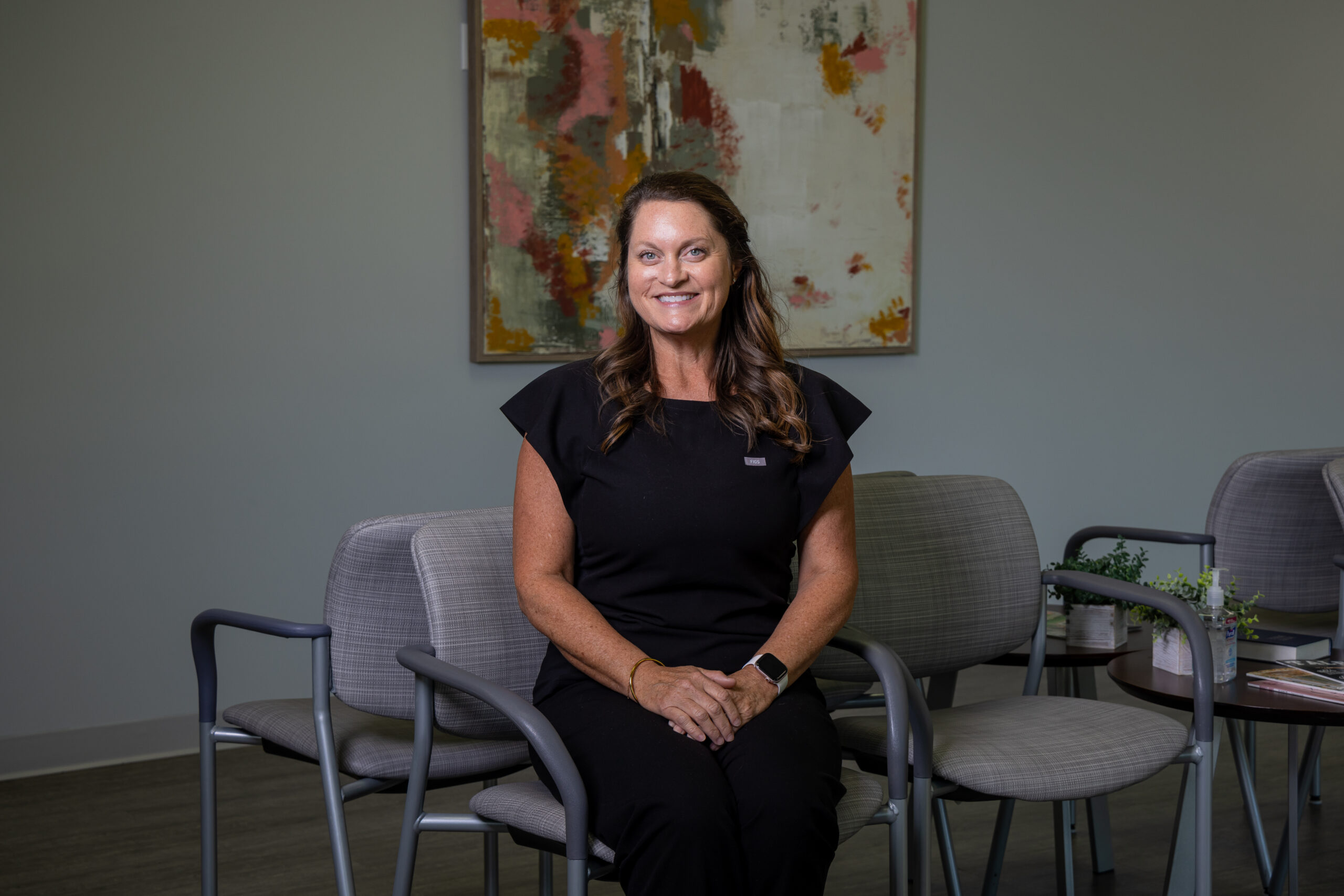


Nurse Practitioner, Surgical Dermatology Group
Words by Linley Allred | Images by Justin Hunter
Terra Nelson keeps three jars in her office at Surgical Dermatology Group in Jasper, each filled with beads.
Every time she performs a biopsy that comes back positive for skin cancer, she adds a bead to the corresponding jar—one for basal cell carcinoma, one for squamous cell carcinoma, and one for melanoma. Since the Jasper office opened in May 2026, the growing collections have become a visual reminder of just how many cases of skin cancer exist within the community.
For Terra, that awareness is deeply personal.
Originally from the Corner area and a graduate of Dora High School, Terra began her career in Jasper as a scrub tech at Walker Baptist Medical Center. She later earned both her Master of Science in Nursing and Doctor of Nursing Practice from the University of Alabama at Birmingham.
After becoming a nurse practitioner in 2006, Terra built much of her career in surgical specialties, gaining extensive experience caring for patients before, during, and after surgery. She also specialized in family practice and worked on weekends treating acute and chronic illnesses, including those with dermatology concerns. This foundation became an important part of her interest in and ultimate transition into dermatology.
That interest became more meaningful approximately five years ago.
“A dear friend and coworker of mine at The Kirklin Clinic was sadly diagnosed with a malignant skin cancer and became terminal. As her illness progressed, she asked her coworkers to have a skin cancer screening in her honor,”Terra recalls.
That screening revealed something Terra had not expected: skin cancer. She was diagnosed with both squamous cell carcinoma and basal cell carcinoma and has since undergone two Mohs procedures in two years.
After the first extensive Mohs procedure on her face, Terra suddenly saw her dermatology patients differently.
Questions such as “How will I look?” and “Will I have a scar?” were no longer hypothetical. She knew firsthand that a skin cancer diagnosis and treatment could have both physical and emotional effects.
The experience also caused Terra to consider what a full-time career in dermatology might look like. Eventually, she decided to make the change, and an opportunity with Surgical Dermatology Group allowed her to practice in Walker County.
Today, that experience shapes how Terra approaches every patient who walks through her door.
“I know I never want my patients to feel rushed,” she says. “I want them to feel educated and confident in a treatment plan when they leave my office.”
That philosophy extends far beyond a cancer diagnosis. Whether she is treating a teenager struggling with acne or someone concerned about warts, psoriasis, or another skin condition, Terra wants patients to understand what they are experiencing and what can be done about it.
For her, education is one of the most important parts of dermatologic care.
“Dermatology and annual skin cancer screenings are a personal passion of mine,” Terra says. “We recently did screenings for City of Jasper employees, and I would love to do more outreach like that in our community. It doesn’t matter if they follow up with me as long as they follow up with someone. Spreading awareness is the key.”
Skin screenings can reveal much more than skin cancer. Changes in skin can provide important clues to underlying diagnoses such as chronic illnesses, auto immune conditions, and even lupus.
When it comes to skin cancer, Terra stresses that early detection can make a significant difference. She encourages people to have a skin screening at least once a year, with more frequent screenings—sometimes every three to six months—recommended for those with certain risk factors or a history of skin cancer.
She also encourages everyday prevention, including wearing a broad-spectrum sunscreen with an SPF of at least 30 and using protective clothing and hats when spending time outdoors.
And in Terra’s office, those three jars continue to fill one bead at a time. For her, each bead represents a person whose cancer was found, and another reason to keep encouraging the community to get checked. 78